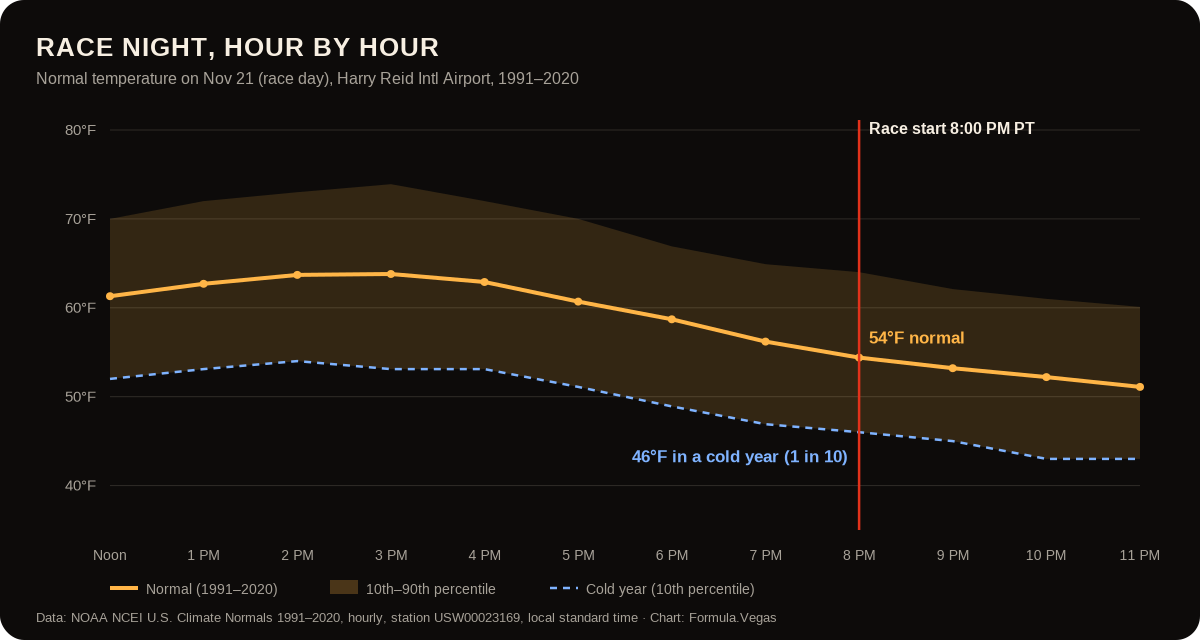
How cold is it on race nights?
Colder than you think. Plan for the 40s °F once the sun’s down, and pack like it. Every session of the 2026 Las Vegas Grand Prix (Thursday, Nov 19 to Saturday, Nov 21) runs after dark, and you’re outside for hours.
National Weather Service normals for those exact dates (1991–2020, measured at Harry Reid airport):
| Date | Normal high | Normal low | Coldest high on record |
|---|---|---|---|
| Thu, Nov 19 | 65°F | 46°F | 46°F (1985) |
| Fri, Nov 20 | 65°F | 45°F | 46°F (1953) |
| Sat, Nov 21 | 64°F | 45°F | 48°F (2004) |
The low usually comes before dawn, so during the sessions you’ll typically be somewhere between those two numbers, dropping as the night goes on. Wind makes grandstands feel colder. November averages only about 0.3 inches of rain for the whole month, but rain does happen.
Check the actual forecast in the days before. We don’t publish our own forecast: the National Weather Service has a point forecast for the Strip and the NWS Las Vegas office is at weather.gov/vef. If rain is forecast, bring a poncho: the organizer doesn’t allow umbrellas (see what you can bring). Both NWS links checked Nov 16, 2026. For a session-by-session race-night forecast with rain odds, see Temperature.Vegas’s F1 race-night page. For November’s normals and records next to the rest of the year, see Temperature.Vegas.
What to wear
Dress for a cold night outdoors, not a warm Vegas afternoon. Gates open at 2:30 PM in daylight, and on race night you won’t be back at your hotel until around midnight.
- Layers you can add to: a base layer, a fleece or sweater, and a windproof jacket on top.
- Beanie and gloves. Not overkill for a still night in the 40s.
- Warm socks and shoes you can walk in for miles. Not new shoes.
- A poncho if there’s rain in the forecast. Umbrellas aren’t allowed.
Dress code: shirts and shoes are required. The organizer can deny entry for profane or offensive clothing, and full face coverings, full face paint and costumes with masks aren’t allowed. Hospitality clubs may have their own dress guidance, so check your ticket emails.
What you can bring (bag policy)
From the organizer’s A–Z guide:
- Bags allowed: a clear tote or backpack up to 12” × 6” × 12”, or a small handbag or fanny pack up to 6” × 9” (doesn’t need to be clear). Diaper bags are allowed with an infant. Every bag is searched.
- Water bottle: empty plastic or silicone, up to 24 oz. Water is free at the beverage tents, and every zone has refill stations.
- Jackets and blankets you carry in get patted down or searched.
- Radios: a small portable radio is fine if you use an earpiece.
- Cameras: point-and-shoot only. No detachable-lens cameras, selfie sticks, tripods, monopods or GoPro mounts.
- Medication: in the original container with your name on it, matching your photo ID.
Not allowed (the ones that catch people out): umbrellas; chairs, stools and seat cushions; strollers; laptops and tablets; cans, glass or metal bottles and hydration packs; outside food and drink (unless it’s medically needed, in a clear bag); coolers; flag poles over 3 ft; markers. There are no lockers and nowhere to leave things at the gate.
Small things worth packing
- A battery pack. There are no charging stations, and your ticket and map are on your phone.
- Earplugs. The cars are loud. Free earplugs are handed out at medical, guest services and accessibility points if you forget.
- A card or phone wallet. It’s cashless inside.
- ID if you’re drinking. Nevada’s drinking age is 21, and you’ll need valid photo ID to buy alcohol.
Getting here and around
Flying in? See getting to Las Vegas for airport taxis, rideshare and when to arrive. Once you’re here, the roads around the track close at 1 PM on session days. See getting around race week and road closures.
First time at the race? The first-timer’s guide puts it all in order.
Sources: National Weather Service Las Vegas, November climate book (1991–2020 normals and records), the organizer’s A–Z guide (attire, bags, prohibited items, water, charging, cashless, alcohol). Checked Oct 22, 2026.
Getting here and around
See the photo gallery →